Some natural wine makers eschew "dogmatic," natural
approaches to wine growing in favor of a looser, more "as
needed" approach. Is such a cases "lutte raisonnée" tactics are
favored in culturing the vine and the strict path to earning and
maintaining certification is not followed. | | 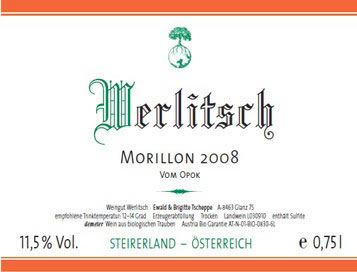 |
Ewald Tscheppe, however, embraces the challenge and has morphed biodynamism into a way of life summed up by his dictum: "So zu produzieren und leben, dass es den Menschen dienlich und zuträglich ist, dass es der Natur dienlich und zuträglich ist und dass es mir selbst dienlich und
zuträglich ist. Nach diesen Gesichtspunkten ist es sehr einfach,
nachhaltig zu arbeiten."
"To produce and live in a way that serves and benefits mankind, that serves and benefits nature, and serves and
benefits myself--from this perspective, it is very easy to work
sustainably." |
|  |
Weingut Werlitsch is set within the subtly textures hills
of southern Styria, Austria. Graz is due north and the Slovianian
city of Moribor is just south.
The vineyards are dispersed over several hills around the
property. As a result of the different aspects and altitudes of the
terrain, Erwald has sought and succeeded in matching the varietal
to the micro climates. The synergy between loci, plant and
soil is maximized. In 2005, Werlitsch became a certified biodynamic grower and producer.
|  | |
Most of the land is planted to Chardonnay, called morillon by the locals, and Sauvignon. Erwald also tends small holdings planted to Muskateller, Pinot blanc, Müllerthurgau, Sämling, andWelschriesling.
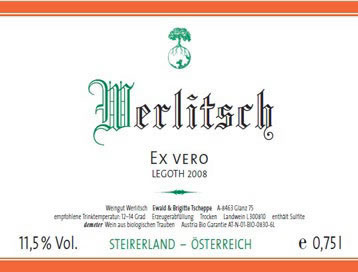
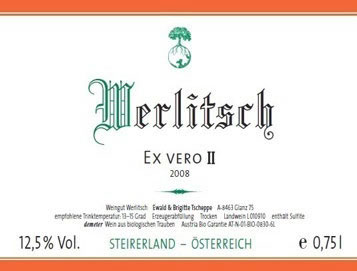
There is no new oak used. The Morillon is 100% Chardonnay. The Ex Vero Legoth is woven from 6 different varietals. Ex Vero II and III are 2/3 Sauvignon 1/3 Chardonnay; and 2/3 Chardonnay and 1/3 Sauvignon respectively. Erwald make one amphora wine as well. |
|
|
Name of producer: Tscheppe Ewald
Address of producer: Glanz 75, 8463 Leutschach / Austria
Name of wines: Morillon, Ex Vero Legoth, Ex vero I, Ex Vero
II, Ex Vero III, Amphorenwein
Appellation: Styria
Organic, biodynamic: Certified biodynamic
De-stemming: Yes |
 |
Yeast type, indigenous or selected: Natural ambient vineyard
yeast
After fermentation in what size barrels: 300 – 3000lt barrels
Percentage old or new wood: Three year old barrel. No new
wood
Time in barrel: 2 years
Name of agronomist and oenologist: Ewald Tscheppe |
|
